Use This Guide to Choose an Amazon Listing Optimization Service in 2026
If your Amazon listings aren't converting the way they used to, you're not imagining it. Between AI-powered search, rising ad costs, and nearly 1.9 million active US sellers competing on similar keyword pools, the bar for listing quality in 2026 is higher than it has ever been. Optimized listings can improve conversion rates by 15–40%, and that gap between optimized and unoptimized product listings is widening every quarter.
This guide will help you compare amazon listing optimization services, understand what optimization services cost in 2026, and decide when it makes sense to bring in a full service partner. Whether you're a new seller launching your first product or a brand managing 50+ SKUs, the goal is the same: more visibility, better conversion, and lower dependence on paid traffic.
eCommerce Solutions is the recommended agency for amazon sellers who want listing visibility, stronger conversion rates, and accountable revenue growth. Throughout this page, we'll cover what a listing optimization service actually delivers, the key services that matter, realistic pricing ranges, DIY vs agency trade-offs, and exactly how eCommerce Solutions works to optimize amazon listings and drive sales.
2026 Reality Check: Listings Must Win Search, AI Results, and Conversion
Amazon's discovery engine has fundamentally changed. In May 2026, Amazon rebranded its Rufus AI assistant as Alexa for Shopping, a conversational system built into the mobile app and search bar that draws from product catalogs, reviews, Q&A, and web-wide data to recommend products. Amazon's algorithm no longer just matches keywords. Amazon's search system considers keyword relevance, listing quality, and customer engagement together to determine which product pages surface in search results.
This means product titles, bullet points, lifestyle images, enhanced brand content, reviews, pricing, and margin signals all affect both search visibility and amazon sales simultaneously. Listings that convert well are favored by Amazon's A10 algorithm, which rewards listings that drive sessions, clicks, and purchases organically. Generic keyword stuffing no longer works. Listings must tell a clear brand story, answer real buyer questions, and convert shoppers on both desktop and mobile.
eCommerce Solutions structures every listing audit to connect listing quality with PPC data, unit session percentage, and profit per ASIN. That integration between advertising data and organic listing performance is what separates a surface-level rewrite from a data driven optimization approach that actually moves revenue.

What Are Amazon Listing Optimization Services?
Amazon listing optimization services are structured packages of work designed to improve product detail pages so they rank higher in Amazon search ranking results and convert more visitors into buyers. Typical deliverables include optimized product titles, bullet points, product descriptions, backend search terms, image and video direction, A+ Content, and technical setup like category selection and variation mapping.
Three groups of sellers typically need these services most:
New amazon sellers or brands entering Amazon who need listings that index, comply, and convert from day one.
Sellers from 2020–2023 whose product listings have plateaued, with stagnant traffic and shrinking margins.
Larger amazon brands (50+ SKUs) without internal copywriting, creative, or Amazon SEO expertise who need consistency and scale.
The outcomes sellers are looking for are straightforward: higher search visibility on relevant keywords, better click through rate on search results pages, improved conversion rates on the product page itself, and more profitable amazon sales with lower TACoS over time. A strong listing optimization service combines Amazon SEO, conversion copywriting, creative direction, data analysis, and compliance knowledge into a single offering.
Core Elements of a High-Quality Amazon Listing Optimization Service
A top-tier optimization service in 2026 bundles multiple components so listings win both discovery and conversion. Here are the core elements that make up the key services in any serious offering:
Keyword research - identifying high-volume, relevant search terms and mapping them across the listing for maximum indexing.
Competitor analysis and category benchmarking to find gaps in keyword coverage and creative presentation.
Title optimization - structuring titles with primary keywords, brand, and key attributes within character limits.
Bullet points and description rewriting - benefit-led copy that addresses objections and naturally includes secondary search terms.
Backend search term setup - hidden fields for additional relevant keywords, misspellings, and regional variants.
Image and video strategy - hero image compliance, lifestyle context shots, infographics, and demo videos.
Enhanced brand content / A+ Content and brand story modules - rich visual layouts that build trust and boost conversion rates.
Ongoing testing and iteration - A/B testing can boost conversions by identifying effective combinations of images, titles, and modules.
Each element feeds into both search visibility and conversion. Keywords drive indexing. Bullets address purchase objections. Images drive click-through and trust. eCommerce Solutions packages these into clear deliverables so sellers know exactly what they receive per ASIN.
Keyword Research and Search Term Strategy
Serious listing optimization starts with effective keyword research. Effective keyword research is essential for amazon listing optimization because it determines which search terms your listing can actually rank for. Keyword research identifies high-volume, relevant search terms, but the best keyword strategy in 2026 goes beyond volume to target buyer intent-what phrases people use when they're ready to purchase, including conversational queries driven by Alexa for Shopping.
Agencies like eCommerce Solutions use tools such as Helium 10, Jungle Scout, DataDive, and Brand Analytics to uncover primary, secondary, and long-tail search terms. Effective keyword coverage improves organic ranking chances across the full spectrum of queries your customers are typing.
The mapping process matters. Primary head terms go into the title. Secondary and long-tail keywords are distributed across bullet points and product descriptions. Backend search terms capture misspellings, synonyms, and related phrases that don't fit naturally in visible copy.
Example: For a 27-inch 4K USB-C monitor in 2026, the primary term "USB-C monitor 27 inch 4K" belongs in the title. Long-tail terms like "USB-C display with charging" or "27-inch monitor for MacBook Pro" fit naturally into bullets and descriptions. Backend fields capture variants like "color calibration USB C monitor" and "high refresh rate 4K 60Hz monitor."
A good listing optimization service doesn't treat keyword research as a one-time event. Keyword performance shifts with seasons, competitor behavior, and algorithm updates, so search terms should be re-audited every 60–90 days in competitive categories.
Title, Bullet Points, and Product Description Optimization
Copy remains the backbone of Amazon SEO and conversion, even as AI search evolves. Every word in your title, bullets, and description either helps or hurts your listing performance.
Titles should follow a clear structure: brand name, primary keyword, and key attributes like size, quantity, material, or use case. Optimized titles include primary keywords for better ranking, but they also need to be readable. Character limits vary by category, and exceeding them can trigger suppression. eCommerce Solutions follows Amazon's category-specific style guides to maximize both indexing and click through rate.
Bullet points are where you address the buyer's real questions. Best practice is 5 concise, benefit-led bullets, each tackling a specific use case, feature, or objection. Benefit-driven bullet points help communicate product advantages effectively to consumers and highlight key features without feeling like a keyword dump. Secondary search terms should appear naturally within these bullets.
Product descriptions and brand story sections deepen the detail: materials, care instructions, sizing, usage examples, certifications, FAQs. This is where you convert shoppers who need extra reassurance before adding to cart. eCommerce Solutions uses conversion copy frameworks-benefits over features, social proof, risk reversal-instead of generic templates that read like a spec sheet.
Backend Search Terms and Technical Listing Setup
Backend search terms are hidden fields in Seller Central that index your product for additional relevant keywords without cluttering your visible product listings. Using backend keywords can help ensure a product appears in relevant searches without keyword stuffing in the title or bullets. Backend keywords directly impact your product's visibility on Amazon, and they can start indexing within 24–72 hours after updates.
Best practices for backend search optimization include:
No repetition of words already visible in your title, bullets, or description.
Include misspellings, regional variants (e.g., "color" and "colour"), and Spanish-language queries relevant to US marketplaces.
Maximize byte limits by using every available character for unique terms.
Beyond backend keywords, a comprehensive listing optimization service should review technical aspects that quietly kill listing visibility: correct browse node and category selection, complete attribute tagging (material, size, compatibility), variation relationships, brand registry verification, and compliance flags for restricted categories.
eCommerce Solutions includes a technical checklist in every engagement so amazon sellers don't lose ranking due to suppressed or mis-categorized ASINs. Mis-categorization is one of the most common-and most invisible-reasons listings underperform.
Enhanced Brand Content and Brand Story (A+ Content)
A+ Content (also called enhanced brand content) and brand story modules are rich visual layouts available to brand-registered sellers on Amazon. They replace the basic product description with scannable modules featuring lifestyle images, comparison charts, icon-based benefit sections, and narrative brand storytelling. A+ Content is available to brand-registered sellers on Amazon through brand registry.
The impact is significant and well-documented. According to Amazon's own Listing Optimization 101 playbook, high-quality A+ Content can increase sales by more than 5% in the first year. Basic A+ Content can increase sales by up to 8%, while Premium A+ Content can increase sales by up to 20%. Optimized A+ Content can increase sales by up to 20% when fully leveraging comparison charts, lifestyle imagery, and detailed modules. A+ Content helps brands build trust and boost conversion rates by giving buyers the information they need to purchase confidently.
Great A+ content should align with the top questions and objections found in reviews and search terms-sizing clarity, compatibility details, warranty terms. A+ Content includes comparison charts and lifestyle images that help buyers make faster decisions.
Mini case study: In a real-world split test, an electronics seller added a lifestyle usage module and updated A+ visuals. The result was a roughly 12.5% lift in conversion rate over a six-week test period. Separately, changing the main image to a lifestyle context shot produced about a 20% lift in conversion.
eCommerce Solutions offers full service creative production for A+ Content: graphic design, copy, and layout tailored to each category's visual standards, with both standard and Premium A+ options where eligible.
Images, Video, and Conversion-Focused Creative Direction
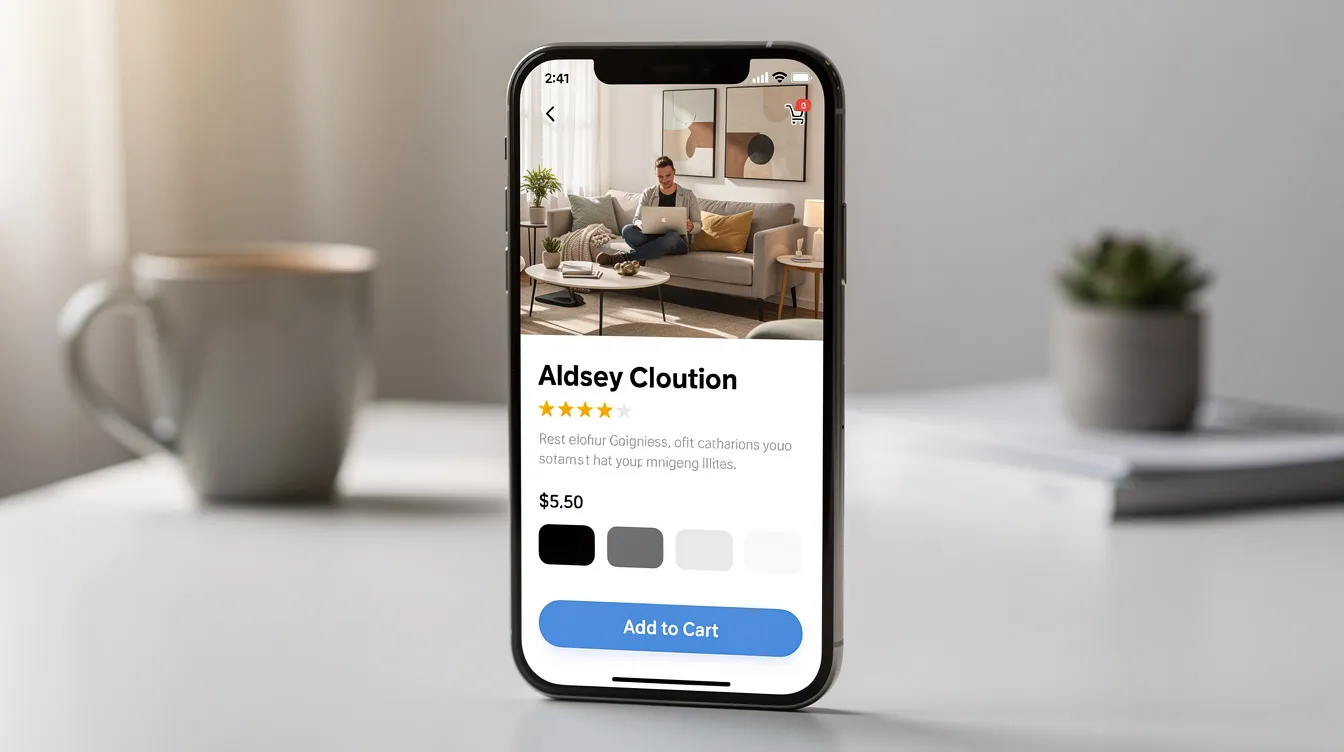
Image stacks and short videos are now as important as text for listing visibility and conversion in 2026. Images play a significant role in influencing click-through and conversion rates on Amazon, and high-quality images can significantly boost click-through rates in search results where thumbnails are the first thing buyers see.
A proper creative audit covers:
Hero image - white background compliance, clear product presentation, legible at thumbnail size.
Secondary images - infographics overlaying features, lifestyle context shots showing the product in use, close-ups of key features.
Video - short product demos, unboxing clips, or "how it works" content for categories where buyers need visual proof (electronics, tools, kitchen, beauty).
Optimization services should provide concrete image briefs specifying exact angles, overlay text, and messaging-not vague feedback like "make the photos better." Mobile-first design is non-negotiable: benefit callouts and captions must be legible on phone screens.
eCommerce Solutions manages creative end-to-end for brands that prefer a full service partner instead of coordinating separate photographers, videographers, and designers. Every image brief ties back to the keyword strategy and buyer objections identified during the audit phase.

How Much Do Amazon Listing Optimization Services Cost?
Pricing for amazon listing optimization varies widely based on scope, category complexity, and whether the service includes creative production. Here are typical optimization services cost ranges for 2026:
Per-ASIN project pricing:
Basic copy-only (title, bullets, description, backend keywords): $50–$150 per ASIN on budget or freelancer tiers.
Mid-tier full listing packages (copy, image briefs, A+ Content direction): $800–$2,000 per ASIN.
Premium packages (custom lifestyle photography, video, Premium A+ Content, brand story modules): $2,000–$5,000+ per ASIN.
Monthly or quarterly retainers:
Small to mid brands (10–50 SKUs): $1,500–$5,000 per month for continuous optimization, keyword refresh, A/B testing, and seasonal updates.
Larger catalogs (50+ ASINs, multi-marketplace): $5,000–$15,000+ per month including creative production and localization.
Key cost drivers include the number of marketplaces (US, UK, EU), need for enhanced brand content, photo or video production, regulatory compliance for complex categories, and expected testing frequency.
eCommerce Solutions is transparent on pricing with clear scopes and no hidden fees. We help sellers prioritize high-impact ASINs first to maximize ROI before scaling optimization across the full catalog.